




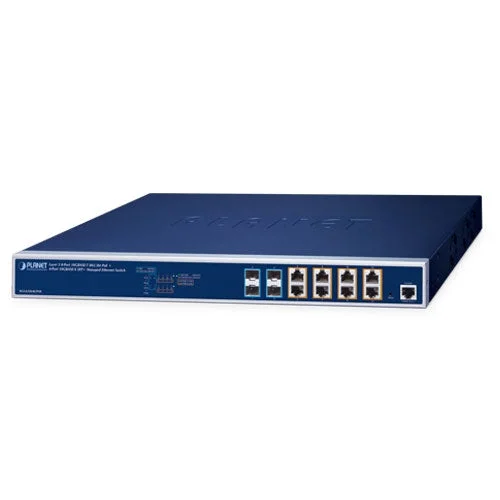
Planet XGS-6320-8UP4X Layer 3 8-Port 10GBASE-T 95W 802.3bt PoE + 4-Port 10GBASE-X
Made in:
Technology:
Brand
All-Port 10G L3 Managed Switch with an Exceptional 95W PoE++ Capability
PLANET XGS-6320-8UP4X Layer 3 10Gbps Ethernet PoE++ Switch is designed for high bandwidth and power-hungry devices like Wi-Fi 7/6E APs, NAS units, thin clients, and surveillance systems. Boasting 8 10GBASE-T copper ports and 4 10GBASE-X SFP+ fiber ports, it ensures flexible connectivity with extended reach.
With a robust 420W PoE budget, each copper port supplies a maximum of 95W PoE power, meeting IEEE 802.3bt PoE++ Type 4 PD device demands. Beyond power, the switch excels in data link capability, hardware-based Layer 3 routing, and a cutting-edge Layer 2 and Layer 4 switching engine. User-friendly IPv6/IPv4 management interfaces ensure seamless control.
Designed for metropolitan areas, smart cities, and enterprises, the XGS-6320-8UP4X empowers next-gen, high-bandwidth networks. Network performance can be elevated with PLANET’s forward-thinking Ethernet PoE switch.
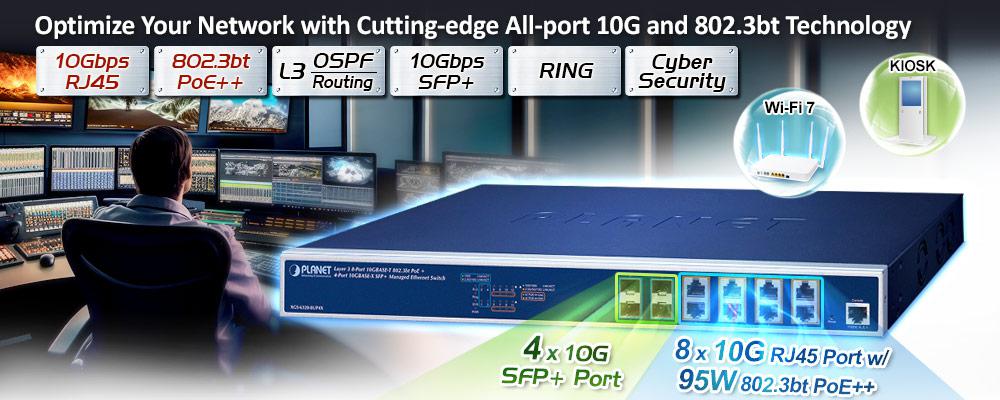
10GBASE-T and 10GBASE-X SFP Dual Media Interfaces for Diversified Bandwidth Applications
PLANET’s XGS-6320-8UP4X has the capability to reach a high speed of 10Gbps over copper or fiber-optic cabling which helps to accelerate the performance of large data transmission. The built-in 10GBASE-T copper interfaces support 5-speed (10G/5G/2.5G/1G/100) auto-negotiation, and 10Gbps data transmission with the existing Cat6/Cat6A UTP cabling, meaning the speed can be increased without costs. It can definitely give you the speed you demand and its Plug and Play makes installation easy.
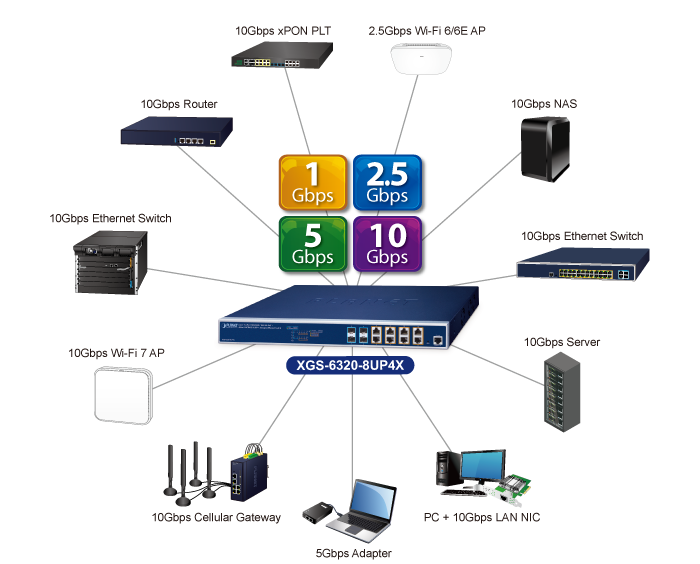
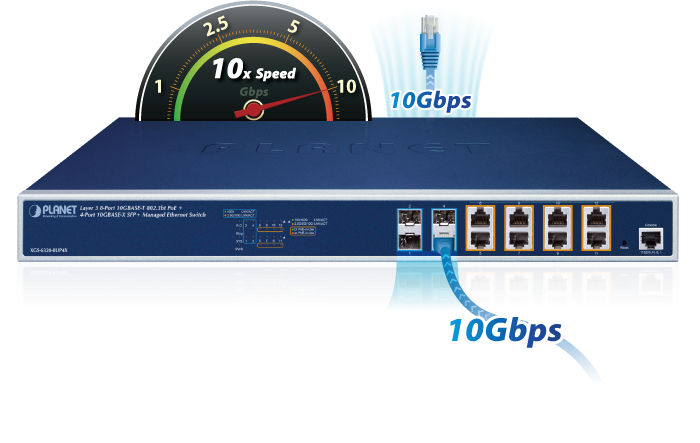
The fiber-optic 10GBASE-X SFP+ interfaces support 3 speeds, 10GBASE-SR/LR, 2500BASE-X and 1000BASE-SX/LX, meaning the administrator now can flexibly choose the suitable SFP/SFP+ transceiver according to the transmission distance or the transmission speed required to extend the network efficiently.
High Power and Full-speed Data Delivered over 4-pair UTP Cabling
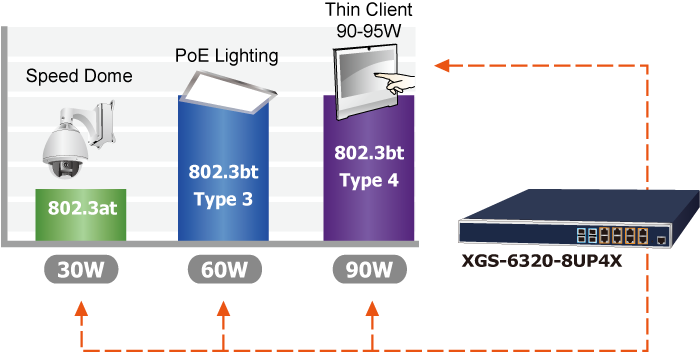
The XGS-6320-8UP4X meets the standards of IEEE 802.bt PoE++ technology and has a total power capacity of 420 watts. It can supply up to 95 watts of power to each PoE-compliant powered device (PD) using all four pairs of standard Cat5e/6 Ethernet cabling, ensuring high power and full-speed data delivery. Compared to the conventional 802.3at PoE+, it offers triple power capacity, making it the perfect solution for higher power consuming PDs, including:
- High-definition PoE PTZ speed dome cameras
- Network devices
- Thin clients
- AIO (all-in-one) touch PCs, point of sale (POS) and information kiosks
- Remote digital signage displays
- PoE lightings
802.3bt PoE++ and Advanced PoE Power Output Mode Management
To meet the demand for supplying stable PoE power to various powered devices, the XGS-6320-8UP4X switch offers five different PoE power output modes for selection.
- 95W 802.3bt PoE++ Power Output Mode
- 95W Force Power Output Mode
- 36W End-span PoE Power Output Mode
- 36W Mid-span PoE Power Output Mode
Intelligent Alive Check for Powered Devices
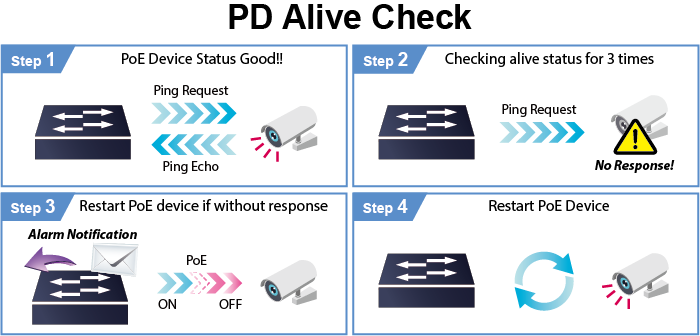
The XGS-6320-8UP4X can be configured to monitor the status of connected powered devices (PDs) in real time through ping action. If a PD stops working and responding, the XGS-6320-8UP4X will recycle the PoE port power and bring the PD back to working condition. This greatly enhances reliability, as the assigned PoE port automatically reboots the PD, reducing the administrator’s management burden.
PoE Scheduling to Save Energy
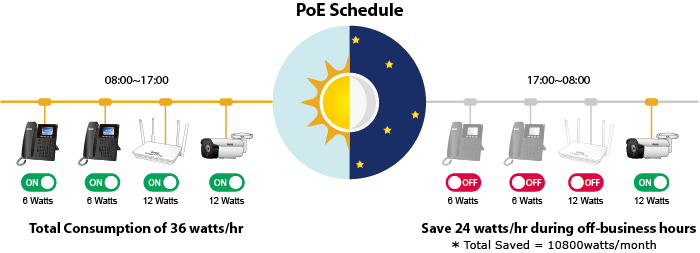
By implementing the “PoE schedule” function, businesses can reduce their energy consumption during non-business hours or periods of low network usage. This not only helps to reduce energy costs but also minimizes the overall carbon footprint of the organization.
Furthermore, the XGS-6320-8UP4X’s PoE scheduling feature provides a convenient and easy-to-use interface for managing power usage. The user can easily set the time intervals for each PoE port, allowing for more efficient power management.
Scheduled Power Recycling
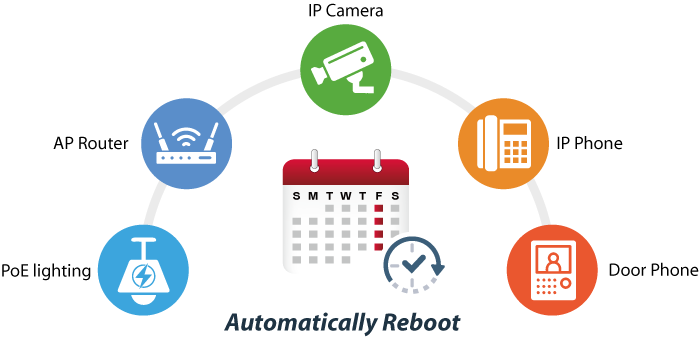
The XGS-6320-8UP4X enables connected PoE IP cameras or PoE wireless access points to reboot at a specific time each week. This will reduce the chance of IP camera or AP crashes resulting from buffer overflow.
Redundant Ring, Fast Recovery for Critical Network Applications
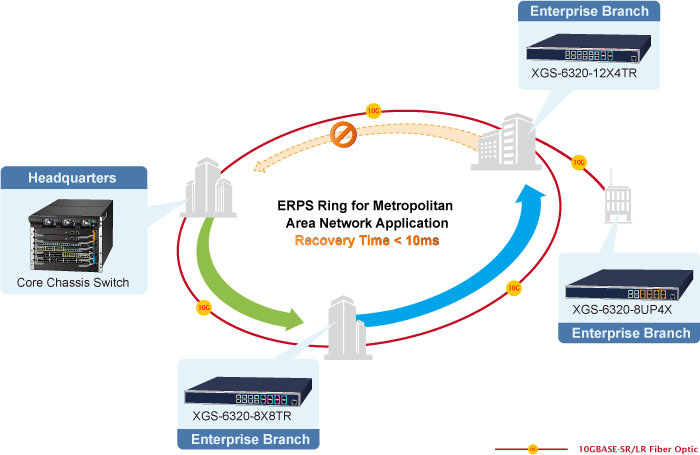
The XGS-6320 series supports redundant ring technology and features strong, rapid self-recovery capability to prevent interruptions and external intrusions. It incorporates advanced ITU-T G.8032 ERPS (Ethernet Ring Protection Switching) technology and Spanning Tree Protocol (802.1w RSTP) into customer’s network to enhance system reliability and uptime in harsh environments. In a certain simple Ring network, the recovery time could be less than 10ms to quickly bring the network back to normal operation.
1588 Time Protocol for Industrial Computing Networks
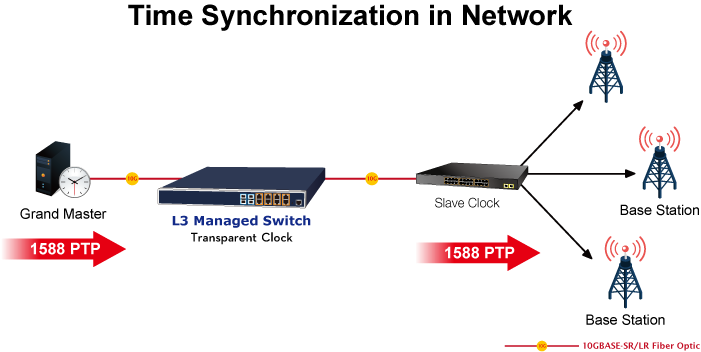
The XGS-6320-8UP4X is ideal for implementing Precision Time Protocol (PTP) applications as a transparent clock. It can play an important role in an IEEE 1588 and Synchronous Ethernet network by supporting MEF service delivery and timing over packet solutions
Layer 3 Routing Support
The XGS-6320 series enables the administrator to conveniently boost network efficiency by configuring Layer 3 IPv4/IPv6 VLAN static routing manually, the RIP (Routing Information Protocol) or OSPF (Open Shortest Path First) settings automatically.
The RIP can employ the hop count as a routing metric and prevent routing loops by implementing a limit on the number of hops allowed in a path from the source to a destination.
The OSPF is an interior dynamic routing protocol for autonomous system based on link state. The protocol creates a database for link state by exchanging link states among Layer 3 switches, and then uses the Shortest Path First algorithm to generate a route table based on that database.
Robust Layer 2 Features
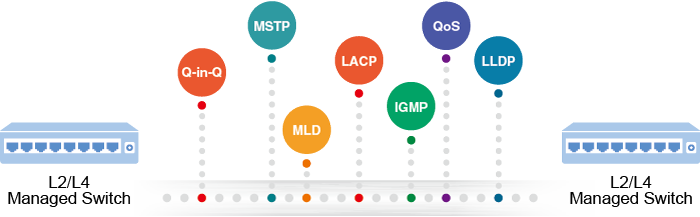
The XGS-6320 series can be programmed for advanced switch management function, such as dynamic port link aggregation, Q-in-Q VLAN, Multiple Spanning Tree Protocol (MSTP), Layer 2/4 QoS, bandwidth control and IGMP/MLD snooping. It allows the operation of a high-speed trunk combining multiple ports. Supporting 8 trunk groups, it enables a maximum of up to 16 ports per trunk and supports connection fail-over as well.
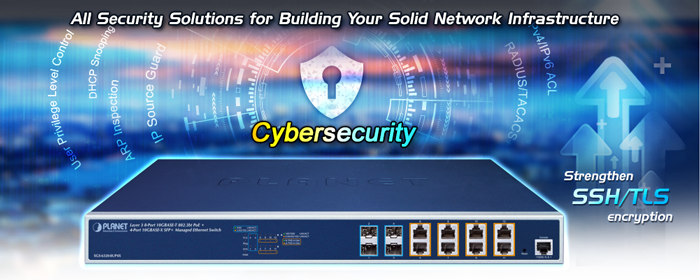
Cybersecurity Network Solution to Minimize Security Risks
The XGS-6320-8UP4X supports SSHv2 and TLSv1.2 protocols to provide strong protection against advanced threats. It includes a range of cybersecurity features such as DHCP Snooping, IP Source Guard, ARP Inspection Protection, 802.1x port-based, and MAC-based network access control, RADIUS and TACACS+ user accounts management, SNMPv3 authentication, and more to provide a comprehensive security solution.
Remote Management Solution
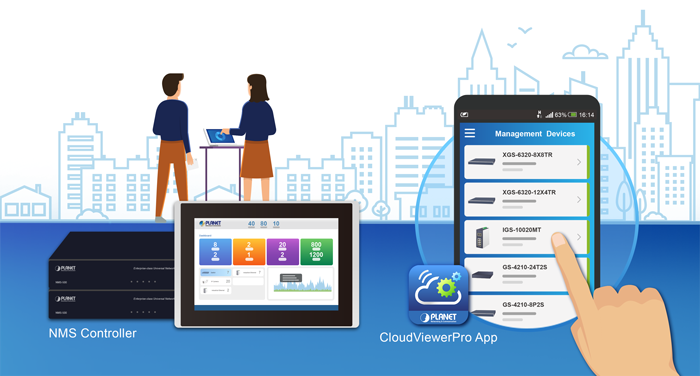
PLANET’s Universal Network Management System (UNI-NMS) and CloudViewerPro app support IT staff by remotely managing all network devices and monitoring PDs’ operational statuses. Thus, they’re designed for both the enterprises and industries where deployments of PDs can be as remote as possible, without having to go to the actual location once a bug or faulty condition is found. With the UNI-NMS or CloudViewerPro app, all kinds of businesses can now be speedily and efficiently managed from one platform.
Intelligent SFP Diagnosis Mechanism
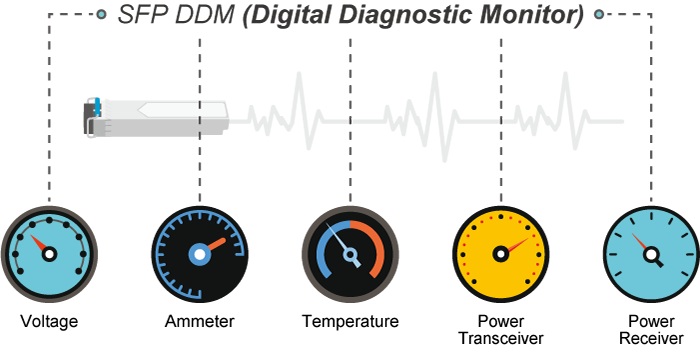
The XGS-6320 series supports SFP-DDM (Digital Diagnostic Monitor) function that greatly helps network administrator to easily monitor real-time parameters of the SFP and SFP+ transceivers, such as optical output power, optical input power, temperature, laser bias current, and transceiver supply voltage.
SMTP/SNMP Trap Event Alert
Though most NVR or camera management software offers SMTP email alert function, the XGS-6320 series further provides event alert function to help to diagnose the abnormal device owing to whether or not there is a break of the network connection.
Physical Port
- 8 10GBASE-T RJ45 ports, backward compatible with 100/1G/2.5G/5GBASE-T auto-negotiation and supports IEEE802.3bt PoE++ standard
- 4 10GBASE-X SFP+ ports, backward compatible with 1000BASE-X and 2500BASE-X SFP transceivers
- RJ45 type RS232 console interface for switch basic management
IEEE 802.3bt Power over Ethernet
- Compliant with IEEE 802.3bt Type-4 PoE++ standard
- Backward compatible with IEEE 802.3af/at PD device
- Each port has a maximum power output of 95 watts (Using the maximum amount may reduce the number of available ports.)
- Total of 420-watt PoE budget
- Detects powered devices (PD) automatically.
- Circuit protection prevents power interference between ports.
- Power feeding up to 100m
- PoE management features
- Total PoE power budget control
- Per port PoE function enable/disable
- PoE admin-mode control
- PoE port power feeding priority
- Per PoE port power limit
- PD classification detection
- Intelligent PoE features
- Temperature threshold setting
- PoE usage threshold setting
- PD alive check
- PoE schedule
- LLDP PoE Neighbors
Layer 3 IP Routing Features
- IPv4 dynamic routing protocol supports RIPv2 and OSPFv2 and IPv6 OSPFv3
- IPv6 dynamic routing protocol supports OSPFv3
- IPv4/IPv6 hardware static routing
- Routing interface provides per VLAN routing mode
Layer2 Features
- Storm Control support
- Broadcast/Multicast/Unknown unicast
- Supports VLAN
- IEEE 802.1Q tagged VLAN
- Supports provider bridging (VLAN Q-in-Q, IEEE 802.1ad)
- Private VLAN Edge (PVE)
- Protocol-based VLAN
- MAC-based VLAN
- Voice VLAN
- GVRP (GARP VLAN Registration Protocol)
- Supports Spanning Tree Protocol
- IEEE 802.1D Spanning Tree Protocol
- IEEE 802.1w Rapid Spanning Tree Protocol
- IEEE 802.1s Multiple Spanning Tree Protocol, spanning tree by VLAN
- BPDU Guard
- Supports Link Aggregation
- 802.3ad Link Aggregation Control Protocol (LACP)
- Cisco ether-channel (static trunk)
- Maximum 8 trunk groups, up to 16 ports per trunk group
- Provides port mirror (many-to-1)
- Port mirroring to monitor the incoming or outgoing traffic on a particular port
- Loop protection to avoid broadcast loops
- Link Layer Discovery Protocol (LLDP)
- Compatible with Cisco uni-directional link detection (UDLD) that monitors a link between two switches and blocks the ports on both ends of the link if the link fails at any point between the two devices
- Supports ITU-T G.8032 ERPS (Ethernet Ring Protection Switching)
Quality of Service
- Ingress Shaper and Egress Rate Limit per port bandwidth control
- 8 priority queues on all switch ports
- Traffic classification
- IEEE 802.1p CoS
- TOS/DSCP/IP Precedence of IPv4/IPv6 packets
- IP TCP/UDP port number
- Typical network application
- Strict priority and Weighted Round Robin (WRR) CoS policies
- Supports QoS and In/Out bandwidth control on each port
- Traffic-policing on the switch port
- DSCP remarking
Multicast
- Supports IPv4 IGMP Snooping v1, v2 and v3
- Supports IPv6 MLD Snooping v1 and v2
- Querier mode support
- IPv4 IGMP Snooping port filtering
- IPv6 MLD Snooping port filtering
- Multicast VLAN Registration (MVR) support
Security
- Authentication
- IEEE 802.1x Port-based/MAC-based network access authentication
- Built-in RADIUS client to co-operate with the RADIUS servers
- TACACS+ login users access authentication
- RADIUS/TACACS+ users access authentication
- Guest VLAN assigns clients to a restricted VLAN with limited services
- Access Control List
- IP-based Access Control List (ACL)
- MAC-based Access Control List
- Source MAC/IP address binding
- DHCP Snooping to filter un-trusted DHCP messages
- Dynamic ARP Inspection discards ARP packets with invalid MAC address to IP address binding
- IP Source Guard prevents IP spoofing attacks
- IP address access management to prevent unauthorized intruder
Management
- IPv4 and IPv6 dual stack management
- Switch Management Interfaces
- Web switch management
- Console and Telnet Command Line Interface
- SNMP v1 and v2c switch management
- SSHv2, TLSv1.2 and SNMPv3 secure access
- SNMP Management
- Four RMON groups (history, statistics, alarms and events)
- SNMP trap for interface Linkup and Link-down notification
- IPv6 IP Address/NTP/DNS management
- Built-in Trivial File Transfer Protocol (TFTP) client
- BOOTP and DHCP for IP address assignment
- System Maintenance
- Firmware upload/download via HTTP/TFTP
- Reset button for system reboot or reset to factory default
- Dual Images
- DHCP Functions:
- DHCP Relay
- DHCP Option82
- DHCP Server
- User Privilege levels control
- NTP (Network Time Protocol)
- Network Diagnostic
- ICMPv6/ICMPv4 Remote Ping
- SFP-DDM (Digital Diagnostic Monitor)
- SMTP, Syslog and SNMP trap remote alarm
- System Log
- PLANET Smart Discovery Utility for deployment management
- PLANET UNI-NMS (Universal Network Management) and CloudViewerPro app for deployment management
| Hardware Specifications | |
|---|---|
| Copper Ports | 8 10GBASE-T RJ45 auto negotiation ports (Ports 5 to 12) Backward compatible with 10G/5G/2.5G/1G/100Mbps data rate |
| SFP+ Slots | 4 10GBASE-SR/LR SFP+ ports (Ports 1 to 4) Backward compatible with 1000BASE-SX/LX/BX and 2500BASE-X SFP transceivers |
| PoE Injector Port | 8 ports with 802.3bt PoE++ injector function from Ports 5 to 12 |
| Console | 1 x RJ45-to-DB9, RS232 serial port (115200, 8, N, 1) |
| Reset Button | < 5 sec: System reboot > 5 sec: Factory default |
| RAM | 2,048Mbytes |
| Flash Memory | 128Mbytes |
| Dimensions (W x D x H) | 440 x 300 x 44mm, 1U height |
| Weight | 4,285g |
| Power Requirements | 100~240V AC, 50/60Hz, 5A max. |
| Power Consumption | AC 110V: 34.5W / 117.7BTU (No loading) ; 502W / 1712.9BTU (Full loading) AC 220V: 33.4W / 114BTU (No loading) ; 488W / 1665.1BTU (Full loading) |
| ESD Protection | 6KV DC |
| Surge Protection | 4KV DC |
| Fan | 3 smart fans |
| LED |
System: PWR (Green), SYS (Green), Ring (Green), Ring Owner (Green) 10GBASE-T RJ45 ports: 100/1000 LNK/ACT (Green) 2.5G/5G/10G LNK/ACT (Amber) 802.3bt PoE-in-Use (Green) 802.3at PoE-in-Use (Amber) 10GBASE-X SFP+ ports: 1000 LNK/ACT (Green) 2.5G/10G LNK/ACT (Amber) |
| Switching Specifications | |
| Switch Architecture | Store-and-Forward |
| Switch Fabric | 240Gbps/non-blocking |
| Throughput | 178.57 @ 64Bytes packet |
| Address Table | 32K entries, automatic source address learning and aging |
| Shared Data Buffer | 32Mbits |
| Flow Control | IEEE 802.3x pause frame for full duplex Back pressure for half duplex |
| Jumbo Frame | 10Kbytes |
| Power Over Ethernet | |
| PoE Standard | IEEE 802.3bt PoE++ Type-4 PSE Backward compatible with 802.3at PoE+ PSE |
| PoE Power Supply Type | 802.3bt End-span Mid-span Force |
| PoE Power Output | Per port 54V DC 802.3bt Type-4 mode: maximum 95 watts End-span mode: maximum 36 watts Mid-span mode: maximum 36 watts Force mode: maximum 95 watts |
| Power Pin Assignment | 802.3bt: 1/2(-), 3/6(+),4/5(+), 7/8(-) End-span: 1/2(-), 3/6(+) Mid-span: 4/5(+), 7/8(-) |
| PoE Power Budget | 420W maximum |
| Max. Number of Type 2 PDs | 8 |
| Max. Number of Type 3 PDs | 7 |
| Max. Number of Type 4 PDs | 4 |
| PoE Management Functions | |
| Active PoE Device Detection | Yes |
| PoE Power Recycling | Yes, daily or predefined schedule |
| PoE Schedule | 4 schedule profiles |
| PoE Extend Mode | Yes, max. 160 meters |
| PoE System Management | System PoE Admin control Total PoE power budget control Auto power input and PoE budget control PoE Legacy mode Over-temperature threshold alarm PoE usage threshold alarm |
| PoE Port Management | Port Enable/Disable/Schedule PoE mode control 802.3bt 802.3at End-span 802.3at Mid-span Force mode Port Priority |
| Layer 3 Functions | |
| IP Interfaces | Max. 128 VLAN interfaces |
| Routing Table | Max. 512 static route entries Max. 3072 routing table entries |
| Routing Protocols | IPv4 RIPv2 IPv4 OSPFv2 IPv6 OSPFv3 IPv4 hardware static routing IPv6 hardware static routing |
| Layer 2 Functions | |
| Port Configuration | Port disable/enable Flow Control disable/enable Port link capability control |
| Port Status | Display each port’s speed duplex mode, link status, flow control status, auto negotiation status, trunk status |
| Port Mirroring | TX/RX/Both Many-to-1 monitor RMirror – Remote Switched Port Analyzer (Cisco RSPAN) Supports up to 5 sessions |
| VLAN | IEEE 802.1Q tag-based VLAN, IEEE 802.1ad Q-in-Q tunneling Private VLAN Edge (PVE) MAC-based VLAN Protocol-based VLAN Voice VLAN MVR (Multicast VLAN Registration) GVRP Up to 4K VLAN groups, out of 4094 VLAN IDs |
| Spanning Tree Protocol | IEEE 802.1D Spanning Tree Protocol (STP) IEEE 802.1w Rapid Spanning Tree Protocol (RSTP) IEEE 802.1s Multiple Spanning Tree Protocol (MSTP) Supports 7 MSTP instances BPDU Guard, BPDU filtering and BPDU transparent Root Guard |
| Link Aggregation | IEEE 802.3ad LACP (static trunk) Supports 6 trunk groups with 12 ports per trunk |
| IGMP Snooping | IPv4 IGMP (v1/v2/v3) snooping IPv4 IGMP querier mode support Supports 255 IGMP groups |
| MLD Snooping | IPv6 MLD (v1/v2) snooping, IPv6 MLD querier mode support Supports 255 MLD groups |
| Bandwidth Control | Per port bandwidth control Ingress: 10Kbps~13128Mbps Egress: 10Kbps~13128Mbps |
| Ring | Supports ERPS, and complies with ITU-T G.8032 Recovery time < 10ms @ 3 nodes Recovery time <50ms @ 16 nodes Supports Major ring and sub-ring |
| Synchronization | IEEE 1588v2 PTP(Precision Time Protocol) Peer-to-peer transparent clock End-to-end transparent clock |
| QoS | Traffic classification based, strict priority and WRR 8-level priority for switching Port number 802.1p priority 802.1Q VLAN tag DSCP/TOS field in IP packet |
| Security Functions | |
| Access Control List | IP-based ACL/MAC-based ACL ACL based on: MAC Address IP Address Ethertype Protocol Type VLAN ID DSCP 802.1p Priority Up to 512 entries |
| Security | Port security IP source guard, up to 512 entries Dynamic ARP inspection, up to 1K entries Command line authority control based on user level Static MAC address, up to 64 entries |
| AAA | RADIUS client TACACS+ client |
| Network Access Control | IEEE 802.1x port-based network access control MAC-based authentication Local/RADIUS authentication |
| Management Functions | |
| Basic Management Interfaces | Console;Telnet; Web browser; SNMP v1, v2c |
| Secure Management Interfaces | SSHv2, TLSv1.2, SNMPv3 |
| System Management | Firmware upgrade by HTTP protocol through Ethernet network Configuration upload/download through HTTP Remote Syslog System log LLDP protocol NTP PLANET Smart Discovery Utility PLANET CloudViewerPro app |
| Event Management | Remote Syslog System log SMTP |
| SNMP MIBs | RFC1213 MIB-II RFC 2863 IF-MIB RFC1643 Ethernet MIB RFC2863 Interface MIB RFC2665 Ether-Like MIB RFC2737 Entity MIB RFC2819 RMON MIB (Groups 1, 2, 3 and 9) RFC2618 RADIUS Client MIB RFC3411SNMP-Frameworks-MIB IEEE802.1X PAE LLDP MAU-MIB Power over Ethernet MIB |
| Standards Conformance | |
| Regulatory Compliance | FCC Part 15 Class A, CE |
| Standards Compliance | IEEE802.3u 100BASE-TX IEEE802.3z 1000BASE-SX/LX IEEE 802.3ab 1000BASE-T IEEE 802.3bz 2.5GBASE-T IEEE 802.3ae 10Gb/s Ethernet IEEE802.3x flow control and back pressure IEEE802.3ad port trunk with LACP IEEE802.1D Spanning Tree Protocol IEEE802.1w Rapid Spanning Tree Protocol IEEE 802.1s Multiple Spanning Tree Protocol IEEE802.1p Class of Service IEEE802.1Q VLAN tagging IEEE 802.1ad Q-in-Q VLAN stacking IEEE 802.1x Port Authentication Network Control IEEE 802.1ab LLDP IEEE 802.3af Power over Ethernet IEEE 802.3at Power over Ethernet Plus IEEE 802.3bt Power over Ethernet Plus Plus IEEE 802.3ah OAM IEEE 802.1ag Connectivity Fault Management (CFM) IEEE 802.3az Energy Efficient Ethernet (EEE) IEEE 1588 PTPv2 RFC 768 UDP RFC 783 TFTP RFC 791 IP RFC 792 ICMP RFC 2068 HTTP RFC 1112 IGMP v1 RFC 2236 IGMP v2 RFC 3376 IGMP v3 RFC 2710 MLD v1 RFC 3810 MLD v2 RFC 2328 OSPF v2 RFC 5340 OSPF v3 RFC 2453 RIP v2 |
| Environments | |
| Operating | Temperature: 0 ~ 50 degrees C Relative Humidity: 5 ~ 95% (non-condensing) |
| Storage | Temperature: -20 ~ 70 degrees C Relative Humidity: 5 ~ 95% (non-condensing) |
| Weight | 0.07 lbs |
|---|---|
| Brand |
Related products
$104.99
$547.80
$149.99
$219.99


